// Technology log
The Haible Schulte Krautrock Phaser
STATUS: BUILT
CATEGORY: EFFECTS
YEAR: 2007
THE MISSION: KRAUTROCK SOUND
The Haible Schulte Krautrock Phaser
Back in 2007, I was diving headfirst into the deep, addictive waters of building my own analog modular synthesizer. I needed an effects unit to complement the raw waveforms of my new DIY rig, and I decided to build it in a Frac Rack modular form factor.
Enter the late Jurgen Haible's legendary Schulte Compact Phasing A clone, better known to synth nerds and psych-rock historians as the Krautrock Phaser. This wasn't just another project; it was my very first DIY effect unit, and it set the stage for a lifetime of workbench adventures.
1.1 // THE LEGACY OF GERT SCHULTE AND COSMIC GERMANY

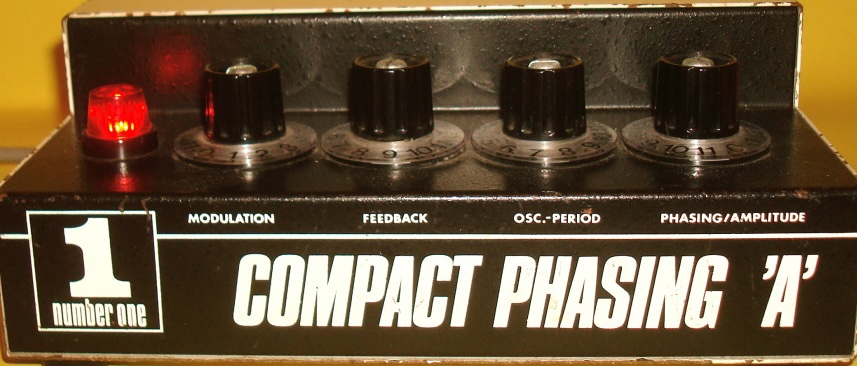
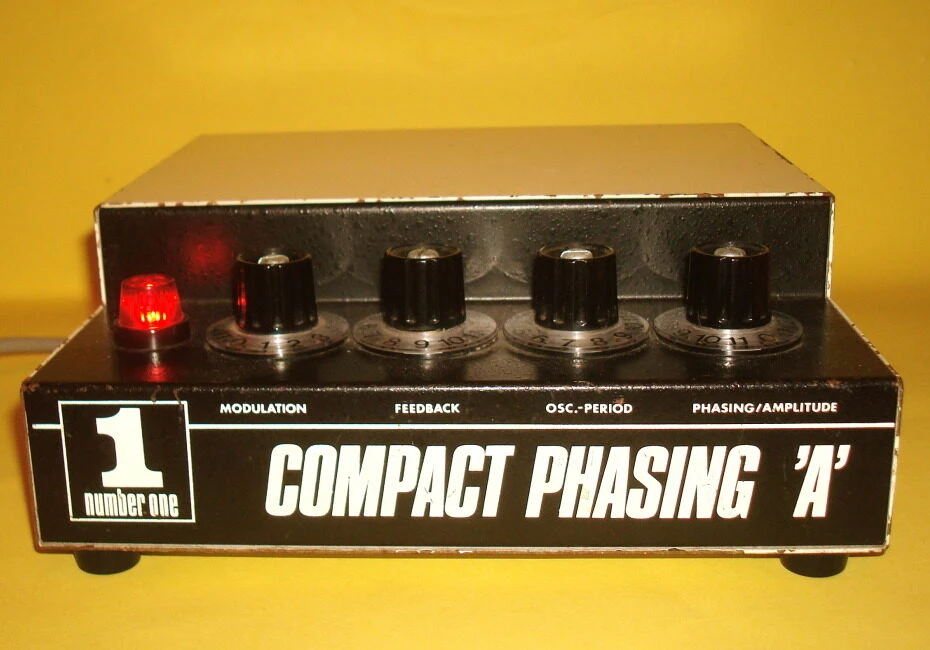
To understand why this specific circuit is so revered, we have to travel back to the experimental music scene of 1970s Berlin. The original Compact Phasing A was designed by German audio engineer Gert Schulte of Gerd Schulte Audio Elektronik. Instead of creating a standard guitar pedal, Schulte engineered a premium studio processor housed in a distinct desktop enclosure with 4 control dials and a glowing light.

His goal was to create an effect that didn't just warp frequencies, but generated a lush, three-dimensional, psychoacoustic space.

It quickly became the definitive sonic glue for the "Krautrock" movement and early electronic music, earning its legendary nickname: the Krautrock Phaser.
1.2 // THE SOUND OF THE PIONEERS

The Schulte Phaser left an indelible mark on music history, defining the signature sound of several legendary artists who wanted to push the boundaries of texture:

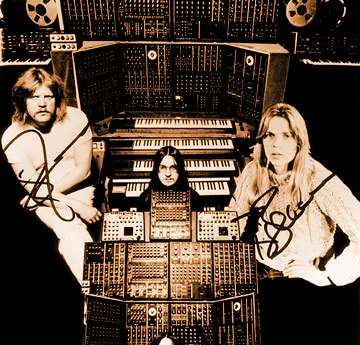
Tangerine Dream: On landmark albums like Phaedra and Rubycon, they famously ran their Mellotrons, string synths, and sequencing modular rigs through the Schulte to achieve their sweeping, "cosmic" stereo imaging.

Klaus Schulze: It was an indispensable tool for Schulze's early solo work. He famously used it on the lead lines of Blackdance, creating a stereo field so wide it pushed vinyl cutting technology to its absolute limits.

Kraftwerk: The electronic pioneers utilized its unique, liquid modulation to add organic, swirling movement to their early, experimental acoustic and electronic instrumentation.

Blackmore & Lord (Rainbow): Proving its versatility beyond synthesizers, Blackmore and Lord famously brought the Schulte into hard rock, using its deep, hypnotic swirl to carve out iconic organ and heavy guitar textures.
1.3 // ARCHITECTURE OF THE 8-POLE LAZY SWEEP

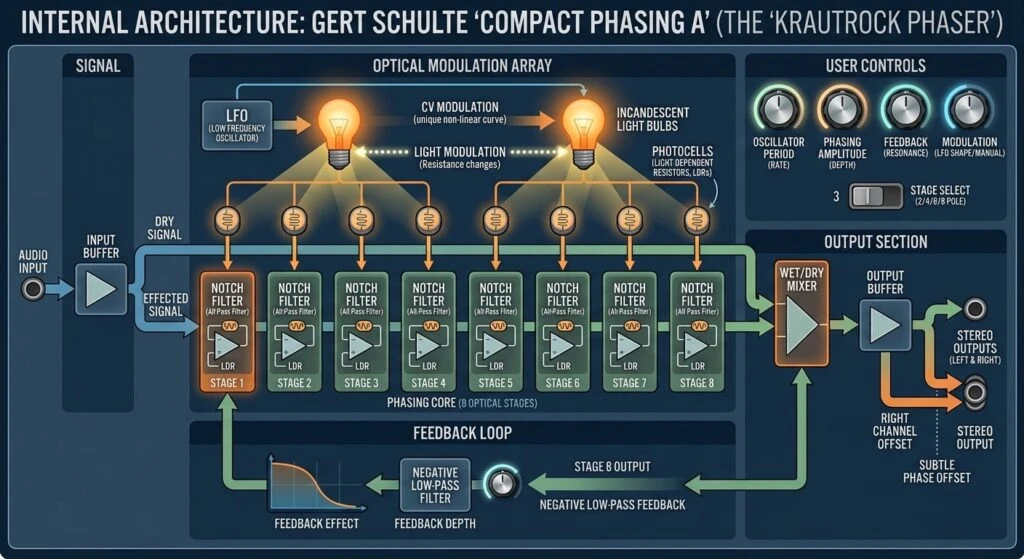
Architecturally, the Schulte design stands completely apart from common 4-stage phasers like the MXR Phase 90 or Electro-Harmonix Small Stone. While standard phasers rely on JFETs or OTA chips, Schulte utilized an intricate opto-electronic design.

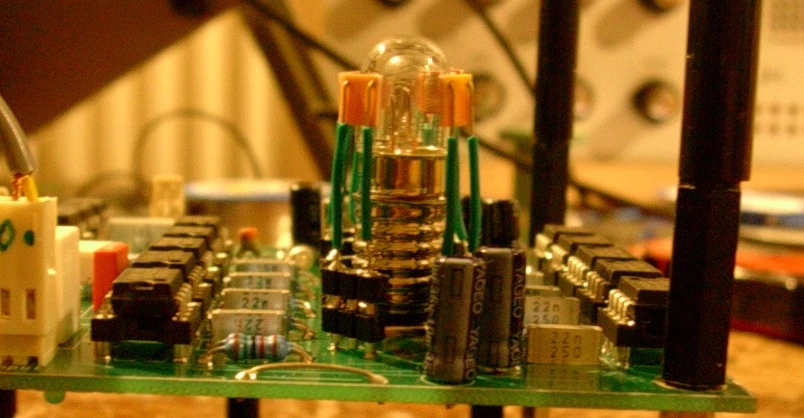
The audio signal passes through an advanced 8-pole (8-stage) all-pass filter network controlled by eight light-dependent resistors (LDRs). These LDRs are clustered around a central light source, a 7v incandescent small light bulb. Because filaments in light bulbs take a fraction of a second to heat up and cool down, they possess a natural physical lag. This gives the phaser an incredibly smooth, organic, and almost vocal modulation curve that modern silicon struggles to replicate.
1.4 // INCANDESCENT BULBS & TOTAL DARKNESS

When recreating this legend via Jurgen Haible's brilliant "Compact Clone" circuit, adhering to the original physics is paramount. The architecture relies heavily on two specific incandescent light bulbs rated at a precise voltage (typically 7V / 100mA). Substituting these with modern LEDs destroys the effect entirely, as LEDs react instantly, stripping away the signature "lazy" sweep of the circuit.

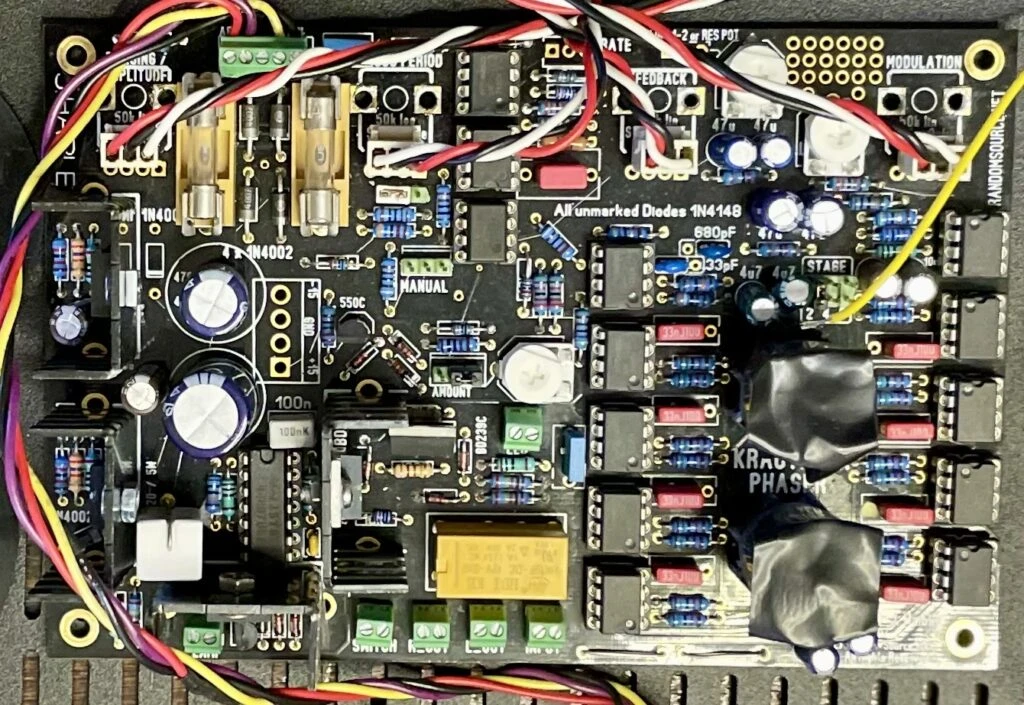
Furthermore, because LDRs are incredibly sensitive, achieving complete darkness inside the unit is mandatory. During the build process, the bulbs and the 8 surrounding photo-electric sensors must be completely enclosed-typically using custom opaque shielding or heavy heat-shrink tubing over the clusters. Without a perfect blackout environment, ambient room light bleeds in, blinding the sensors and freezing the phasing effect entirely.
1.5 // A MISPLACED AND A HELPING HAND

This project holds a deeply personal spot on my workbench. As I mentioned in a previous blog post, it came with a classic first-time builder's rite of passage: placing the wrong resistor value. I tried to debug the board for a few months but could not find anything wrong.

Desperate to find why my circuit was dead, I reached out to the DIY community.

Jurgen Haible himself responded, proving to be incredibly generous with his time. His patient, excellent troubleshooting support got my phaser breathing and instilled a confidence in me that led to building many more of his fantastic designs over the years.

It taught me a solid lesson; always test resistor values when opening a new component bag fresh from a supplier. The bag was labeled 2.43K Ohm and the actual content was 243K Ohm. From that point I double check prior to soldering.
1.6 // SOURCING AND BUILDING THE LEGACY TODAY

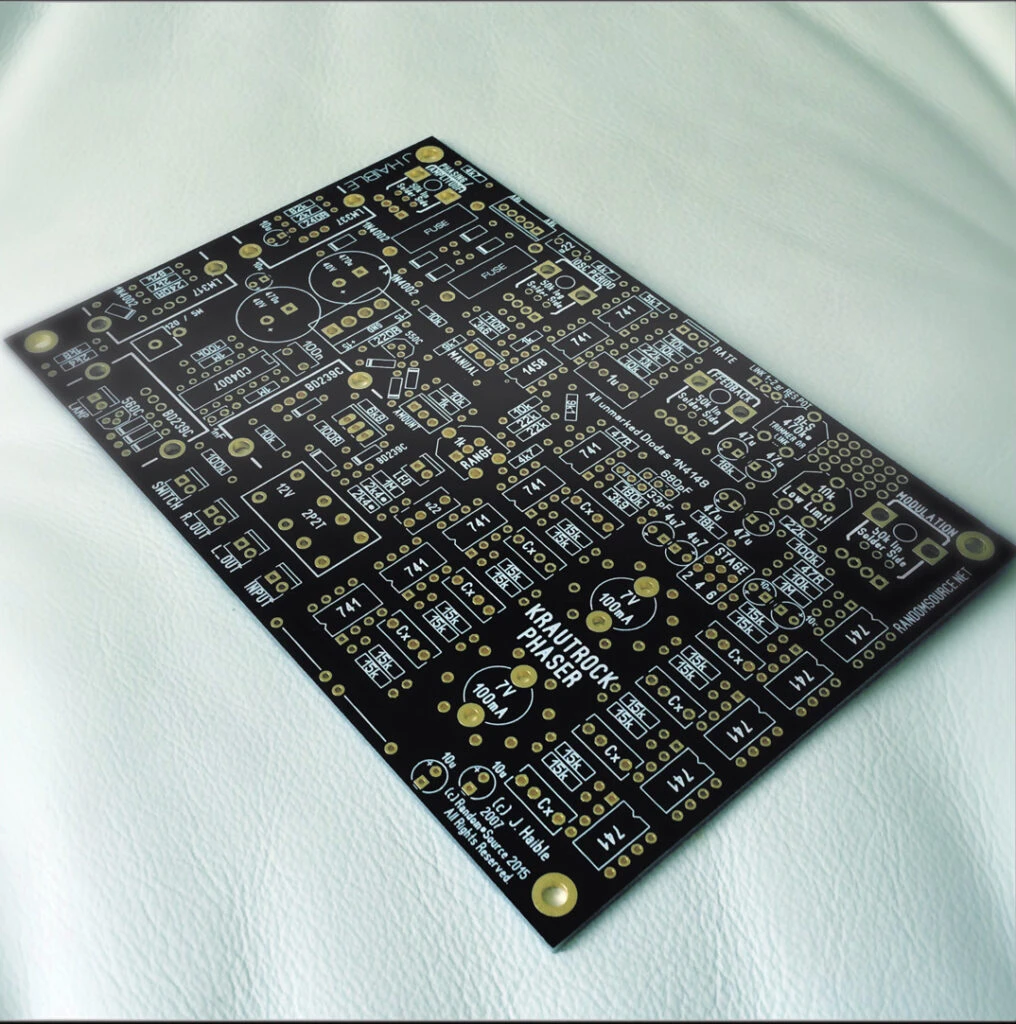
If you want to build a "Krautrock Phaser" today, the DIY landscape has evolved, but the project is still very much alive. Jurgen Haible's legacy is officially preserved and managed by Random*Source, who offer a faithful re-issue of Jurgen's original 2015 "Schulte Compact Clone" PCB.

Boutique DIY shops like synthCube or Serge Modular regularly stock these official boards along with matching front panels.

When sourcing your Bill of Materials (BOM), you will need to keep a few specific, "hard-to-get" parts in mind:

The Lamps: The original spec requires rare 7V / 100mA T1 flange incandescent bulbs. Do not compromise here; buy spares, as they dictate the LFO shape and may eventually burn out. I have a few spares and can send over.

The Optocouplers/LDRs: Finding 8 perfectly matched discrete Light Dependent Resistors can be tedious. Many modern builders opt for high-quality cadmium-sulfide (CdS) LDRs and I have found Adafruit ones at Farnell.

The Power Supply: The circuit requires a specialized power section (often requiring an external 18VAC wall-wart or an internal toroidal transformer with 2x15V secondaries) to handle both the audio rails and the heavy current draw of the incandescent bulbs.

If a pure, raw through-hole build feels too daunting, Van Daal Electronics may be still offer a modernized standalone desktop variation called the "Compact Phasing X" which features enhanced power management and an easier calibration process using the Haible/Random*Source core.

1.7 // HOW DOES IT SOUND?

Here are two sound samples that showcase the Phaser's sound.

Demo 1:
Classical '70 electronic music with bass sequencer and string machine. No additional effect other than the Phaser.

Demo 2:
Phaser effect on VC-340 strings. First the dry signal, then phaser w/ 2 stages (classical Schulte) and then 4 and 6 stages as its an option of the modern PCB.
2.0 // REFLECTIONS

I have built the original Haible board and used his web site instructions to create my Frac Rack unit. I have later on sold it and a few later down the road built it again using Random Source board and can certify they work.

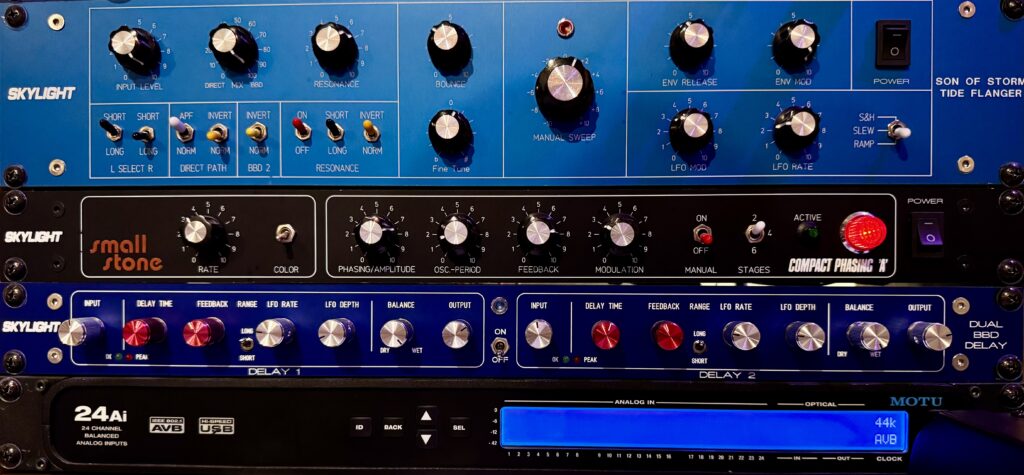
My unit is now in a 19" rack format alongside another famous phaser, the Small Stone, which makes this unit a phasing monster :-)

I find myself using this phaser in almost every project and running raw waveforms from my DIY modular synth through this circuit instantly teleports the audio back to 1974.

It is more than just an effects processor; it is a bridge to the engineering brilliance of Gerd Schulte and Jurgen Haible. For any DIYer looking to add true vintage character to their synthesizer setup, tackling this opto-coupled masterpiece is an unforgettable rite of passage.