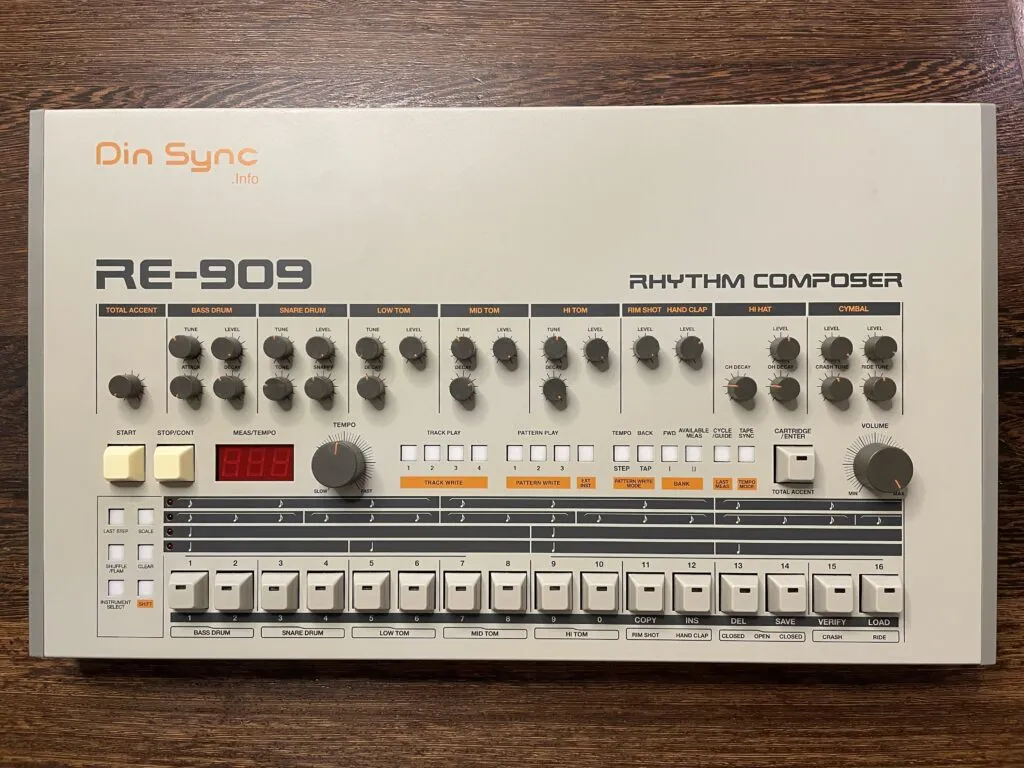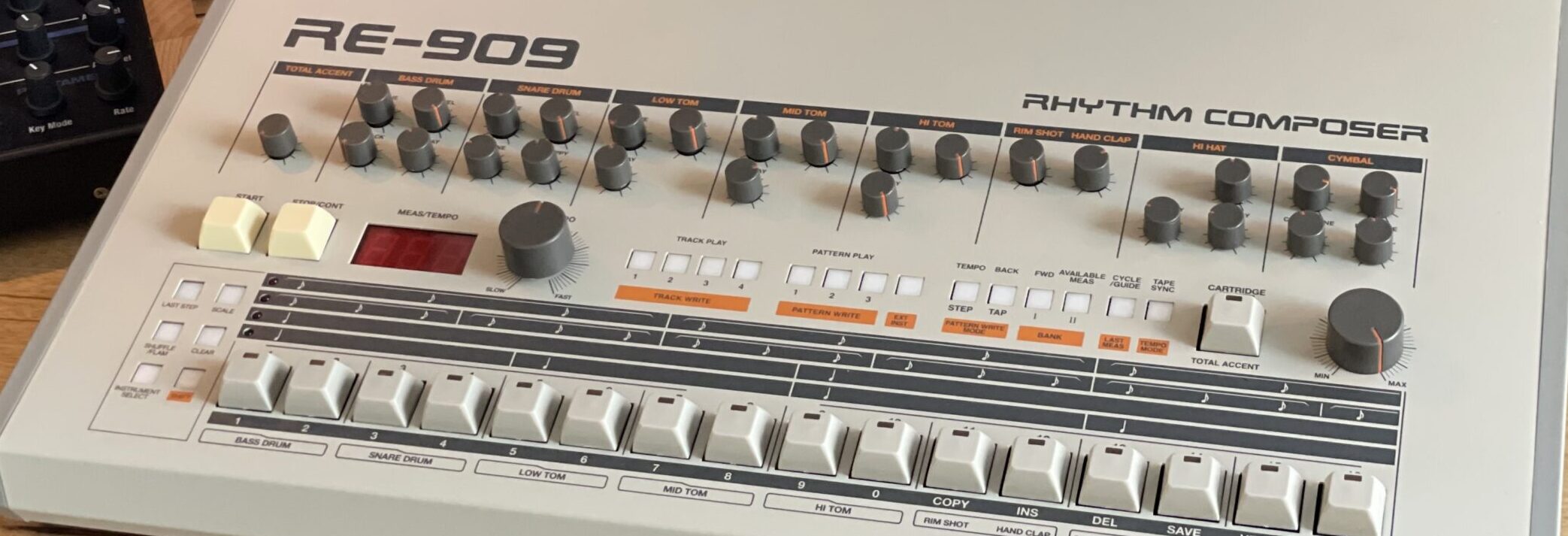
STATUS: COMPLETED
CATEGORY: DRUM MACHINE
YEAR: 2022
THE MISSION: ROLAND TR-909
The Beat That Changed Everything: The TR-909 Legacy
Before diving into the scent of melting solder and tangles of wires, we have to respect the foundation. It is vital to discuss the importance of the Roland TR-909 in the electronic music scene, and also the music genre and sound that was defined with the Roland TR-909.
From the relentless, driving pulse of Detroit techno to the soulful, swinging grooves of early Chicago housemusic, the 909 wasn't just a participant, it defined the sound of an entire generation. It is also important to highlight the notable artists who used this as their main instrument, like Jeff Mills, who practically turned the drum machine into a virtuosic live performance tool.
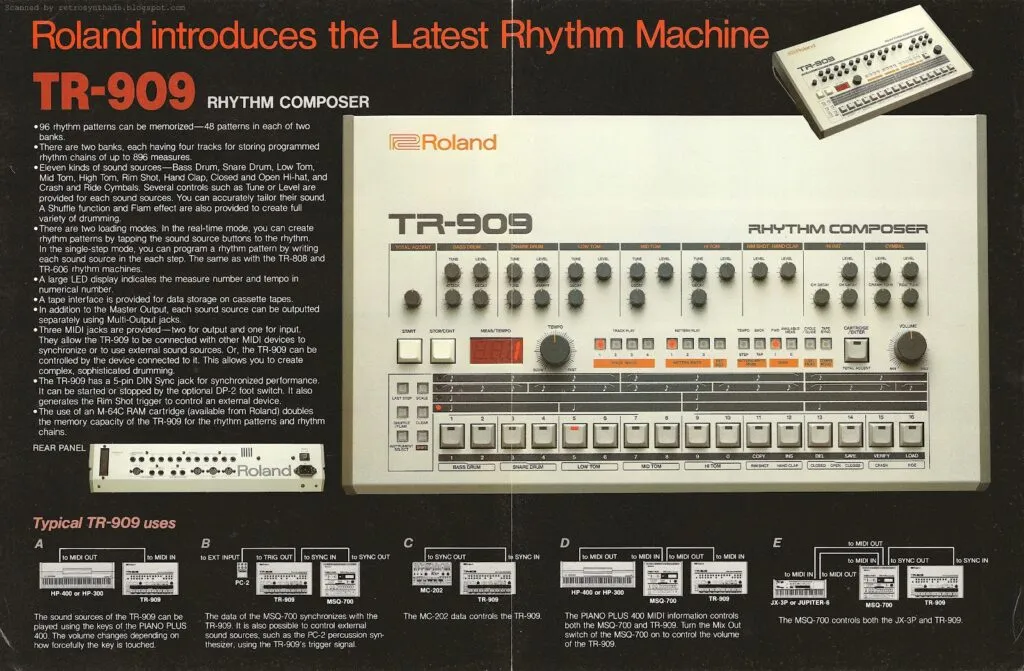
1.1 // A MEMORY FROM 1985

My own fascination with this machine started decades ago. When I bought my first analog synthesizer in 1985, the Roland HS-60, which is essentially a Roland Juno 106 with speakers and boring faceplate colors, I noticed a very large drum machine in the store, the Roland TR-909.

The moment I pressed play, it sounded like nothing I have heard before. The kick was massive, and the hi-hats cut through the air with a gritty sizzle. At the time, I could only afford a Roland TR-606, but the memory of that magnificent beast lasted a very long time. Even back then, I knew that one day I will add one to my studio.
1.2 // RESURRECTING THE LEGEND

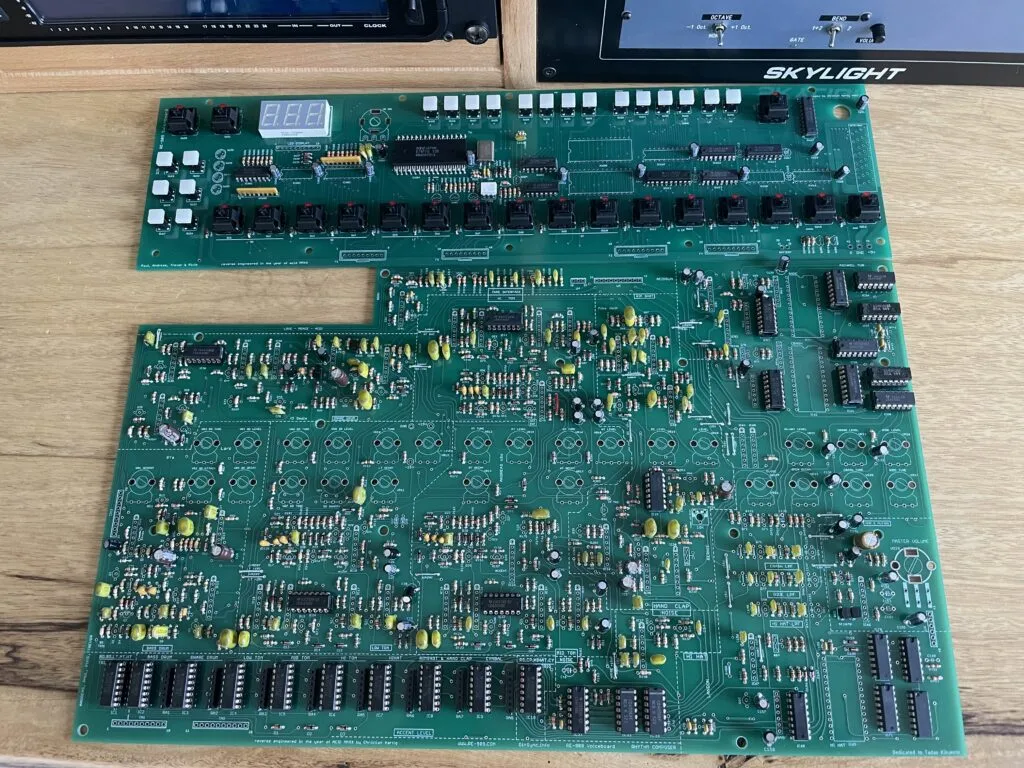
The journey to resurrect this legend starts with the Din Sync project. For builders and synth enthusiasts, their website, re-303.com, offers kits and hardware parts for classical Roland machines. This was my first Din Sync project, but it quickly led to many others.

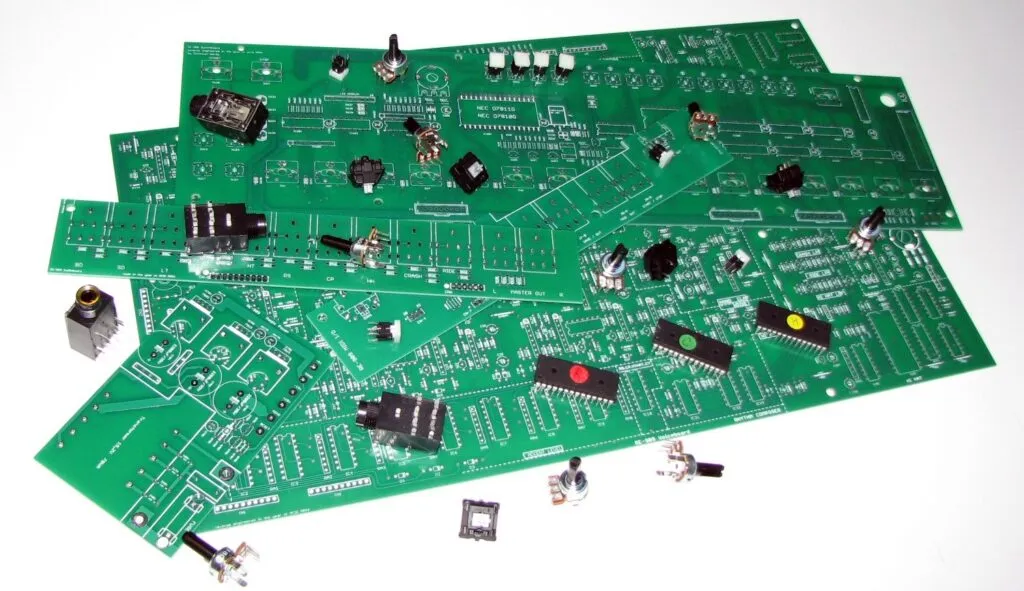
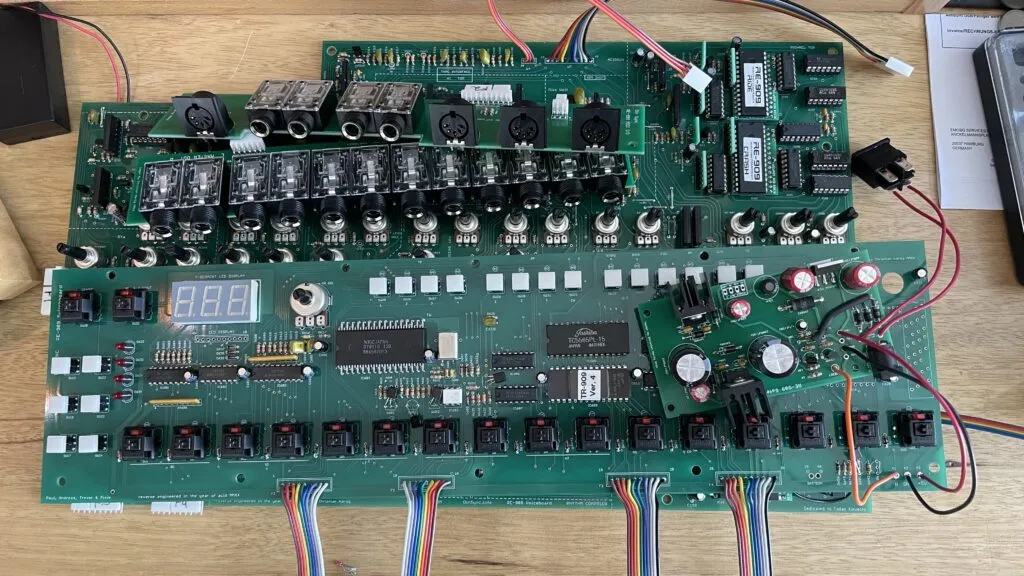
The provided kit contains a complete PCB board set and the essential mechanical foundation of potentiometers, DAC array and the famous cymbals EPROMs to name a few.

It's a beautifully curated starting point that takes a lot of the initial guesswork out of such a massive undertaking.
1.3 // THE ALCHEMIST'S BENCH

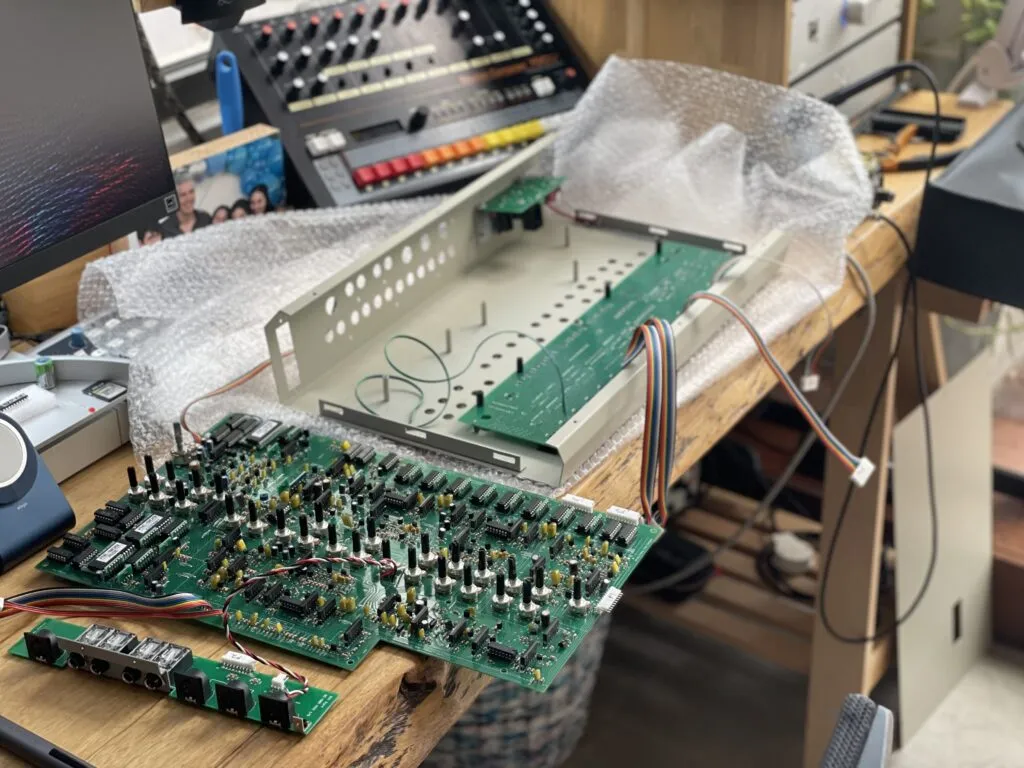
Building an RE-909 is a labor of love that goes beyond just assembling a pre-packaged kit. To truly capture that authentic 80s warmth and character, you have to hunt down specific vintage components like specific transistors and Roland BA662 ones. I also chose to go for carbon resistors and old film capacitors.

Once your parts are gathered, you must follow the build manual step by step with soldering parts sequencing and the case assembling guide. It demands incredible patience and a steady hand, but watching a pile of raw components slowly take the shape of a legendary instrument is an unmatched feeling for any DIY enthusiast.
1.4 // EXPANDING THE SONIC PALETTE

One uniquely fun dilemma you face during the build is deciding what to do with the original memory cartridge slot at the back of the unit. You have a couple of great routes here. You can use a cartridge 3D model as one option to keep the look purely authentic.]

The other option is to install a nice little module that provides settings for Hi Hat Tune, Clap Reverb level, BD drive and a BD decay extension. This second option is brilliant, it takes an already massive-sounding machine and gives you incredible modern sound-shaping tools that original 909 owners could only dream of.
1.5 // VOLATILE MINDS: THE BATTERY

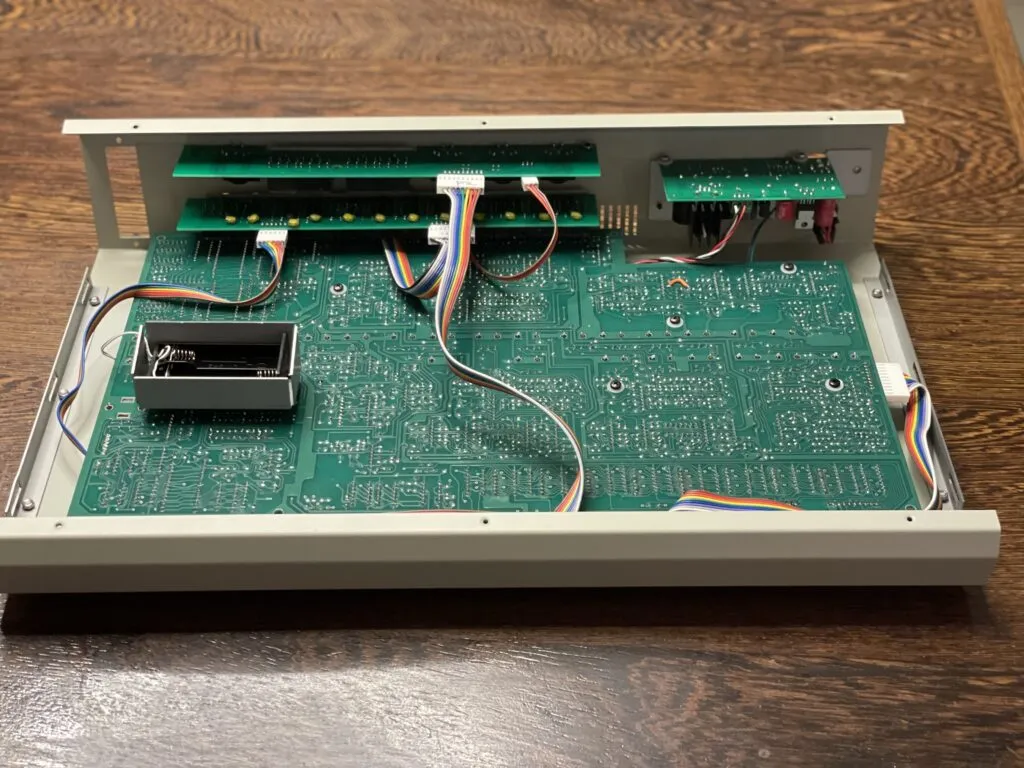
Because this replica is so faithful to the original, there are some vintage quirks you have to manage. As the RE-909 uses the original operating system and control circuitry, it also means it has volatile memory that will get wiped upon power off. To solve this, two 1.5v AA batteries are in place to prevent memory wiping when the unit is powered off.

But this presents a terrifying question: So, how do you replace aged batteries with new ones while retaining memory? This is achieved via battery replacement while the unit is powered on. It feels like a high-wire act, but it works! Also, a quick word of advice for gigging musicians: make sure to secure the batteries in place if you need to transport the machine so as to not wipe your memory with previous programming.
1.6 // THE HUMAN TOUCH

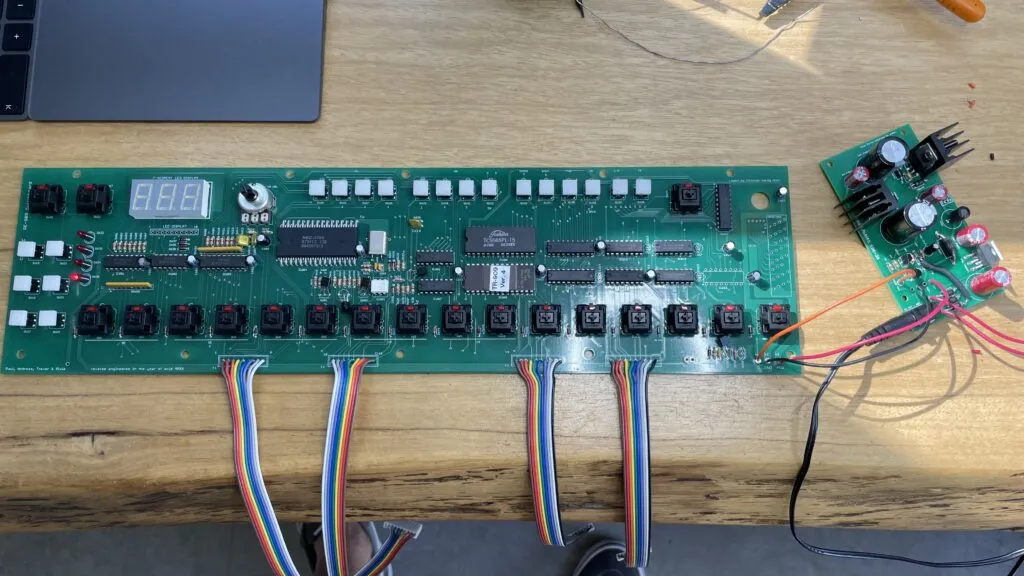
When you build your own instrument, you aren't just soldering components; you are defining its physical character by establishing your tactile options. The TR-909 isn't a set-and-forget studio tool, it's an instrument meant to be played live.

Because you are assembling it yourself, you have the ultimate say in how it feels. You can choose potentiometers with a bit more physical resistance for precise, smooth sweeps of your tuning and decay settings, or looser ones for rapid, aggressive tweaks during a jam. You can select mechanical switches that give you that deeply satisfying, audible "clack" when you drop the kick drum back into the mix.

This level of customization ensures that the machine doesn't just sound like a classic; it feels like your classic, tailored perfectly to your own hands and performance style.
1.7 // LOCKING THE GROOVE

When it comes time to integrate your newly built RE-909 into your studio ecosystem, there are two ways to synchronize the machine to an external beat; Roland Din Sync and MIDI.

However, you need to be aware of a quirk in the vintage software. Proper MIDI synchronization requires the use of OS4 while OS4 has issues with DinSync and its better to use OS1 for that mode. Because of these OS differences, you need to look at your setup and so choose wisely.
2.0 // THE FINAL VERDICT

So, after all the sourcing, the careful soldering, the late-night troubleshooting, and the battery-swapping anxiety, what is the final verdict? Is it worth dedicating hours of your life to building the RE-909? Not to mention the costs involved...

Absolutely.

There is an indescribable magic in flipping the power switch, hitting "Play," and hearing that iconic, earth-shaking 909 kick drum burst out of a machine you built with your own two hands.

You aren't just saving money compared to buying an exorbitant vintage unit; you are gaining an intimate understanding of how this legendary circuitry breathes. You become part of the machine's history. For any musician, producer, or DIY builder looking for the ultimate, hands-on centerpiece for their studio, the RE-909 project is a challenging and deeply rewarding triumph.