BIOGRAPHY
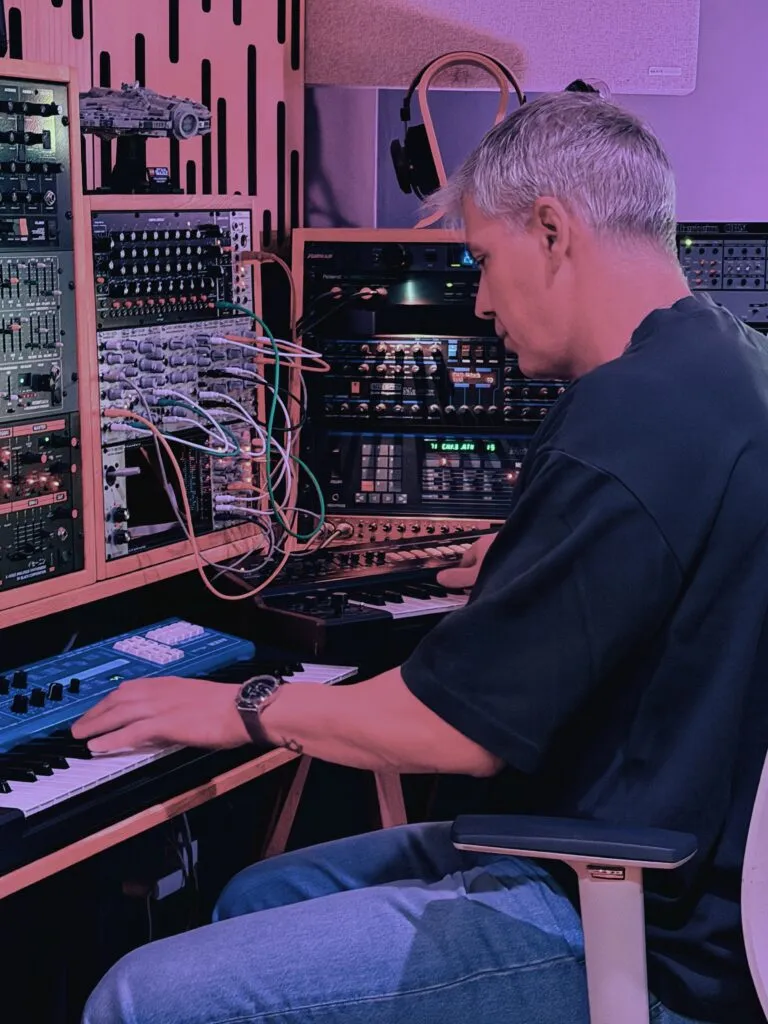
For me, music isn't about complexity for complexity’s sake; it’s about creating a space where the listener can just… be. Whether I’m working on Everything Will Dissolve or just experimenting in the studio, my goal is always the same: to tell a story without needing words. I don’t see myself as a 'visionary', I’m just someone who loves the process of building worlds out of thin air.
When I’m not in the studio, you’ll probably find me looking for old vinyl, or just enjoying a quiet coffee.
I make this music for me, but I share it for you. Thanks for being part of the journey.
1986 - late 1990s - Discovery & Foundations
I started making electronic music in 1986, when I got my first synthesizer. From the beginning, I was less interested in songs and more interested in sound itself, how tones evolve, how machines respond, how systems behave over time.
This period was all about exploration. I experimented constantly, learning synthesis hands-on, recording ideas, building early setups, and understanding electronics not just as tools but as instruments. There were no releases yet, but this was where my language formed: texture, space, patience, and structure.
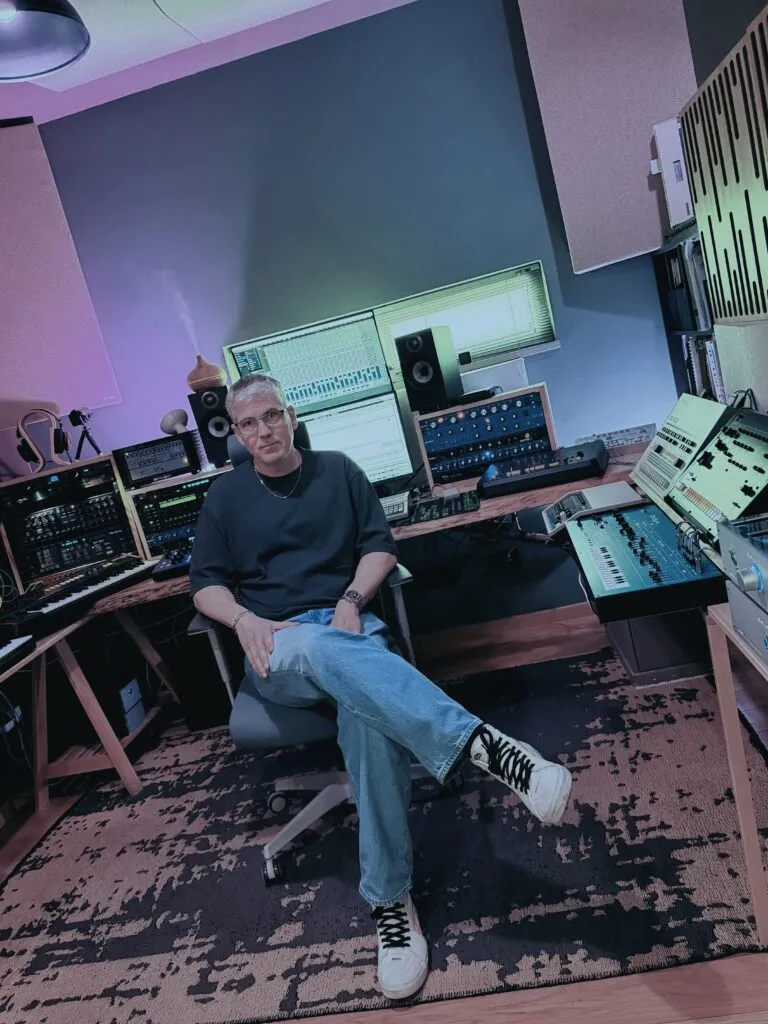
The studio at this stage was raw and constantly changing, pieces of gear coming in and out, signal chains evolving, and a growing fascination with how modifying hardware or routing could completely change the emotional result.
2000–2010 - First Albums & Identity
Around 2000, I began releasing full albums. This was the shift from private experimentation to finished bodies of work.
Albums like Nibiru and Retrospective captured my early voice: long-form electronic pieces, atmospheric movement, and a focus on immersion rather than immediacy.
Musically, I leaned into ambient and instrumental electronic forms, allowing tracks to unfold slowly and deliberately. Collaboration during this phase was minimal, when it happened, it was selective and purpose-driven, usually centered around texture or sonic contribution rather than traditional songwriting roles.
Technologically, my studio became more intentional. I started designing workflows around albums rather than tracks, refining my signal paths, and developing a deeper relationship with both analog and digital synthesis. The studio stopped being a collection of tools and became a coherent system.
2011 - 2019 - Depth, Atmosphere & Studio as Instrument
With albums like Moab, Ambience, Atmosphere, and Signal, my work moved further into depth and restraint. These releases were less about experimentation and more about control knowing exactly when to add, when to remove, and how long to let ideas breathe.
This is also where my studio truly became an extension of my musical identity. I invested heavily in shaping my own environment: analog synths, modular elements, custom routing, and hybrid setups that allowed for hands-on performance and detailed sound design.
Collaboration during this period remained rare but meaningful. When others were involved, it was to introduce a specific human or sonic element into an otherwise tightly controlled system — never diluting the core vision, only expanding it.
2020 - Present - Maturity, Systems & Long-Form Vision
With Memoria Technica, Gravity and Everything Will Dissolve and newer work, my focus shifted toward maturity and clarity. The music became more composed, more intentional, and more reflective — still electronic, still instrumental, but grounded in years of technical understanding and listening experience.
I now think in terms of systems: albums as complete environments, studios as living instruments, and technology as something to be shaped rather than consumed. I build, tweak, and refine my setups continuously, often creating the conditions for music to emerge rather than forcing it.
Collaboration today is a conscious choice used sparingly, when it adds contrast, dialogue, or a new layer of meaning. The core of the work remains deeply personal and self-directed.
This phase isn’t about output volume. It’s about depth, coherence, and longevity.