// Technology log
Reclaiming the Oberheim OB-X Sound
STATUS: COMPLETED
CATEGORY: SYNTHESIZERS
THE OBSESSION: POLYPHONY
YEAR: 2019
THE SIREN SONG OF 'SUBDIVISIONS'
Reclaiming the Oberheim OB-X Sound
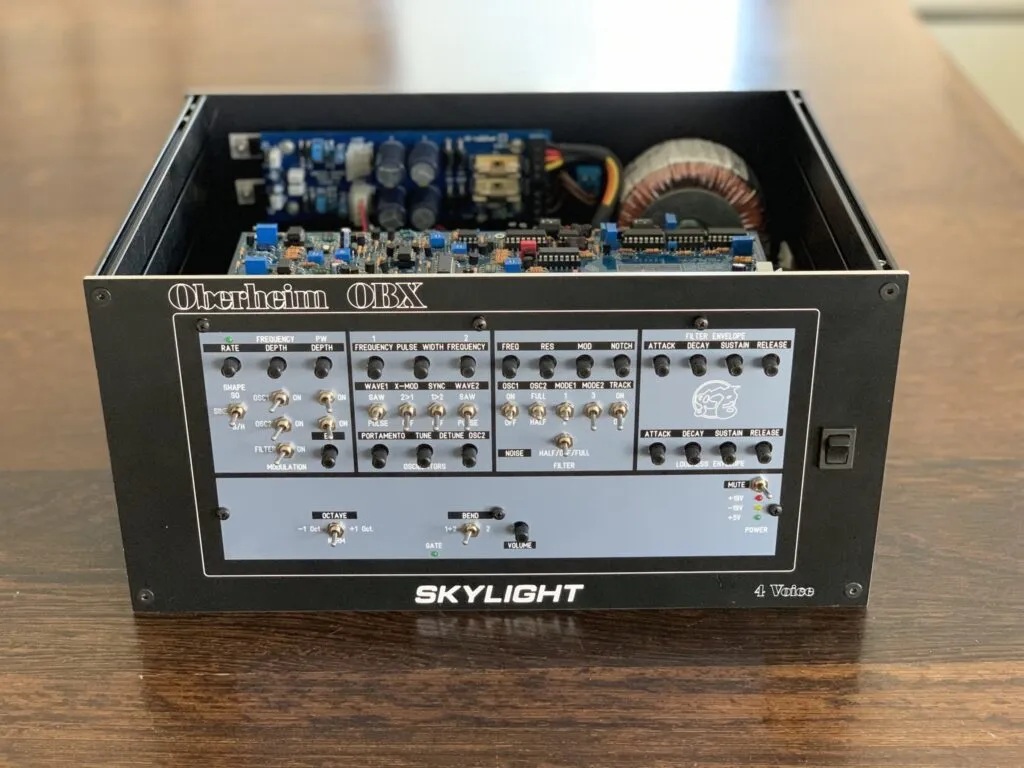
It started with that opening chord. In 1982, Geddy Lee unleashed a sound on Rush's Signals that redefined what a synthesizer could be: a massive, punchy, low-end growl that felt more like a physical force than a keyboard. The Oberheim OB-X was the source, a beast of discrete circuits and unstable voice cards.
The OB-X was Oberheim's first polyphonic analog synthesizer and one that introduces the voice card, which is a complete voice on a single card. It also featured an all discrete circuits which provided the synth with a specific warm sound due to inherent instabilities of its voice cards.
For decades, it was a dream I couldn't afford. Then, in 2017, the CrowBX project whispered a dangerous idea: Build it yourself.
1.1 // THE SILENT BLUEPRINTS

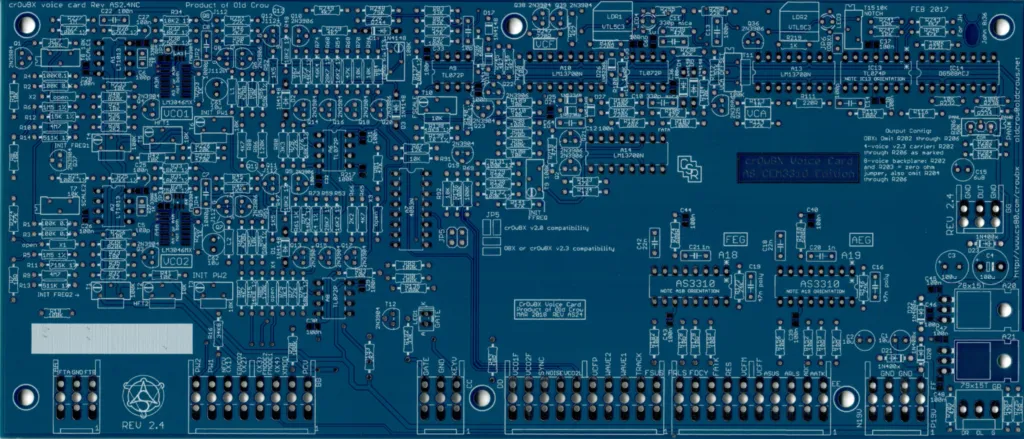
The Version 2.4 voice cards arrived like a riddle. There was no manual, no guide, and effectively zero documentation online for this specific revision. I had a BOM (Bill of Materials) and a prayer. Every component I soldered felt like a leap of faith. When you're dealing with new filter modes and IC-based envelopes without a map, you aren't just building a synth-you're archeology-ing a legend.
1.2 // THE FACE OF A LEGEND: THE COSMETIC SOUL

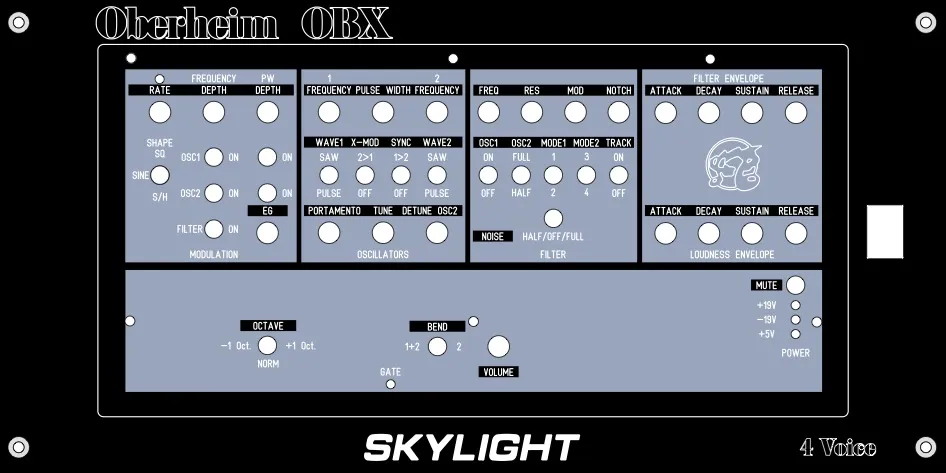
I had a vision of a stand alone 4 voice units in its own enclosure with the power supply unit, MIDI to CV converter and a glorious front panel. I got the basic .fpd file used with frontpanelexpress.com service and started to customize it.

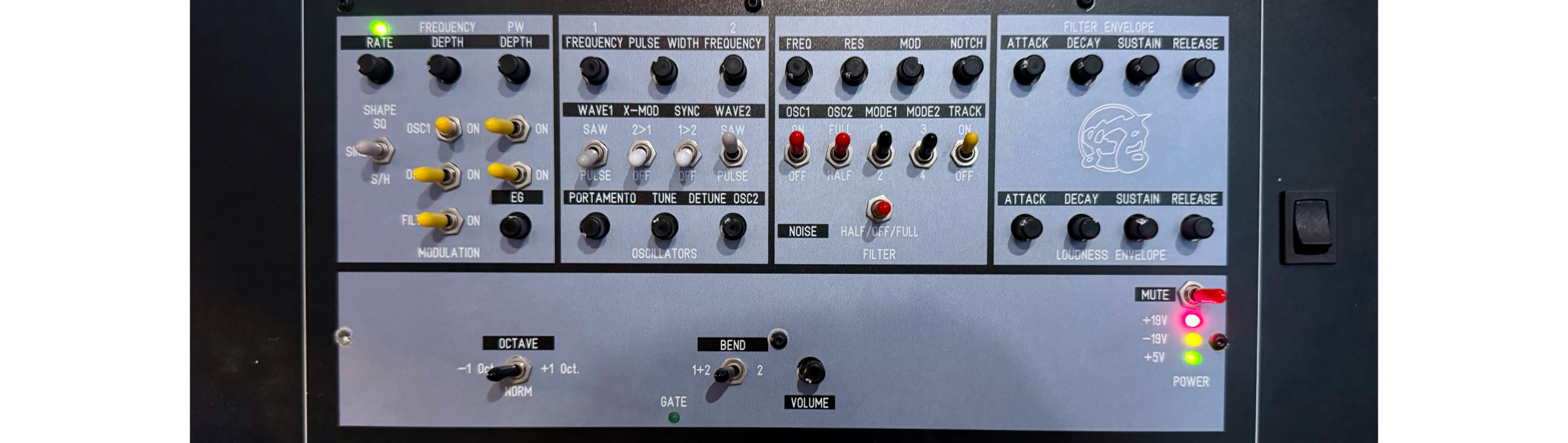
What I had in mind is the Oberheim OBX panel. It has a black and gray/purple color coding, where each control section has their own visual area. Front panel software introduced just then on-panel printing, which allowed me to "paint" the panel as I like. I went on to mimic the original OBX interface elements and visual language on my panel and the end result is very close to the original.

The aluminum chassis was a massive investment, but the moment the on-panel printing was finished, the project stopped being a collection of boards and started being an Oberheim.
1.3 // THE TRANSLATOR: FINDING THE MIDI BRAIN

The only way to control this unit is via control voltage and gate events, very much like with traditional analog hardware of pre-MIDI era. Since I planned to use it with MIDI gear, I had to find a good MIDI 2 CV board that I could stick inside the OBX enclosure, connect with the +/- 15V inside, support mono and 4 voice poly mode and have a stable and reliable CV output.

My first attempt was Midimuso CV-12 kit, that has a pre-programmed chip that support many functions such as Pitch, Control, Aftertouch, pitch bend and MIDI clock.
This choice had cost me about a full year delay of completing the project. I'll explain more below, but suffice to say I almost gave up on this.

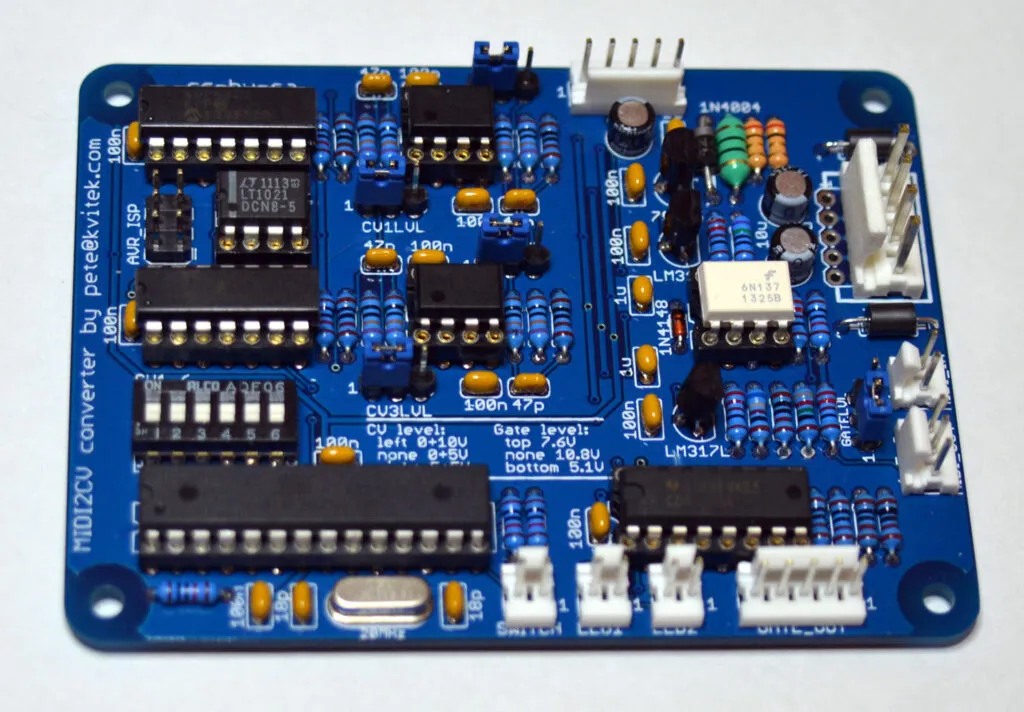
I then moved to MIDI2CV by Pete Kvitek, which proved to be a much better and stable project. It also has a set of dip switched on the board to change from mono to poly. This unit proves itself with a stable and consistent operation.

I've been doing MIDI2CV for 20 years now and what I constantly go back to is how accurate is the output voltage across 8 octaves. Slight variations will mean noticeable pitch inaccuracies.
1.4 // THE DARK YEAR: THE BOX OF SHAME

I almost lost hope. I spent considerable time and money on this project and when I turned everything on, I could not get any sound. I played my MIDI keyboard but no sound came out of the damn thing. I traced the signal path, looked for bad solder joints, traced voltages across key areas but nothing.

After a few months of on and off debugging, I packed the entire project into a box and hid it away for a year, convinced I had built a very expensive paperweight.

Almost a year passed and I had an urge to reopen the box and see with a fresh perspective what's going on. I reconnected the boards together and for some reason decided to connect a CV keyboard, and bam, sound came out!

It was the Midimuso MIDI to CV converter that did not work reliably in that setup. I replaced the MIDI converter with a different one and was able to get a working 4 voice Oberheim OBX synthesizer working.

1.5 // THE CALIBRATION RITUAL: THE ART OF DRIFT

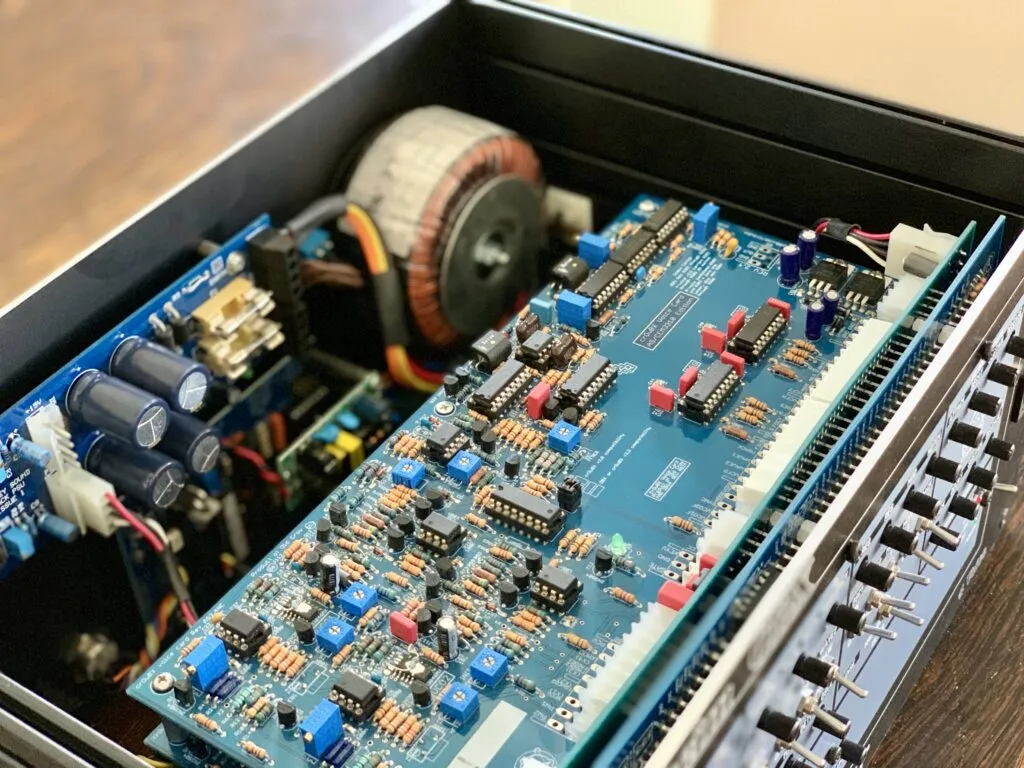
Tuning an analog poly-synth is a meditation. You have to wait 20 minutes for the circuits to "wake up" and breathe, letting the heat settle. Because I needed to tune the machine while the case was sealed, I had to replace the internal trimmers with external potentiometers. It's a delicate dance of Volts-per-Octave and Initial Frequency; you tweak one, and the others shift. You don't tune an OB-X; you negotiate with it.
2.0 // THE UNAPOLOGETIC RAWNESS: OB-X LIVES

The "Skylight OBX" is now the heart of my studio.

Since the 2020 album Memoria Technica, it has appeared on nearly every track I've written. It has a raw, unapologetic character that slices through a digital mix like a hot wire. It is immediate, tactile, and rewarding.

A 4-voice reminder that some sounds are worth fighting for, even if that fight takes a year of silence to win.